April 2026
Report Distribution
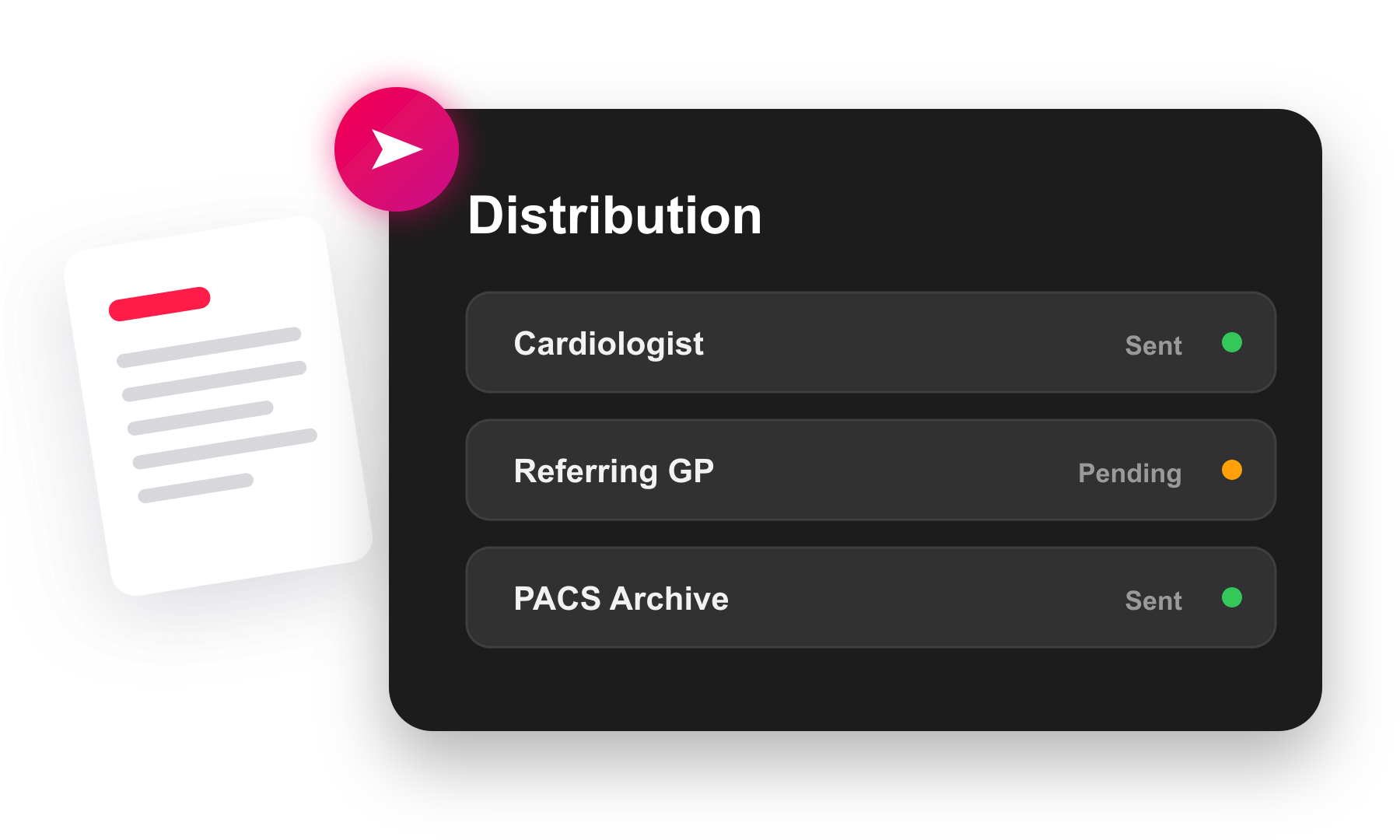
Reports can now be easily distributed to many different destinations, all tracked directly in HeartLab, giving clinicians and administrators greater control while reducing manual follow-up.
Administrators set up distributions and recipients in the Report Distributions settings, and can control distribution based on the study's assignee and report's status, ensuring reports reach the right destination in multi-physician environments. Email distribution of reports is now possible, and these emails can include the report PDF as an attachment, as well as a study share link.
Report distribution status is shown directly on the Study List via a new status icon, allowing users to quickly identify whether a report has been sent, is pending, or has encountered an error. Clicking this icon shows the full distribution history for the study, and reports can be re-sent at any time with a single click.
Quick-Add to Findings and Conclusions
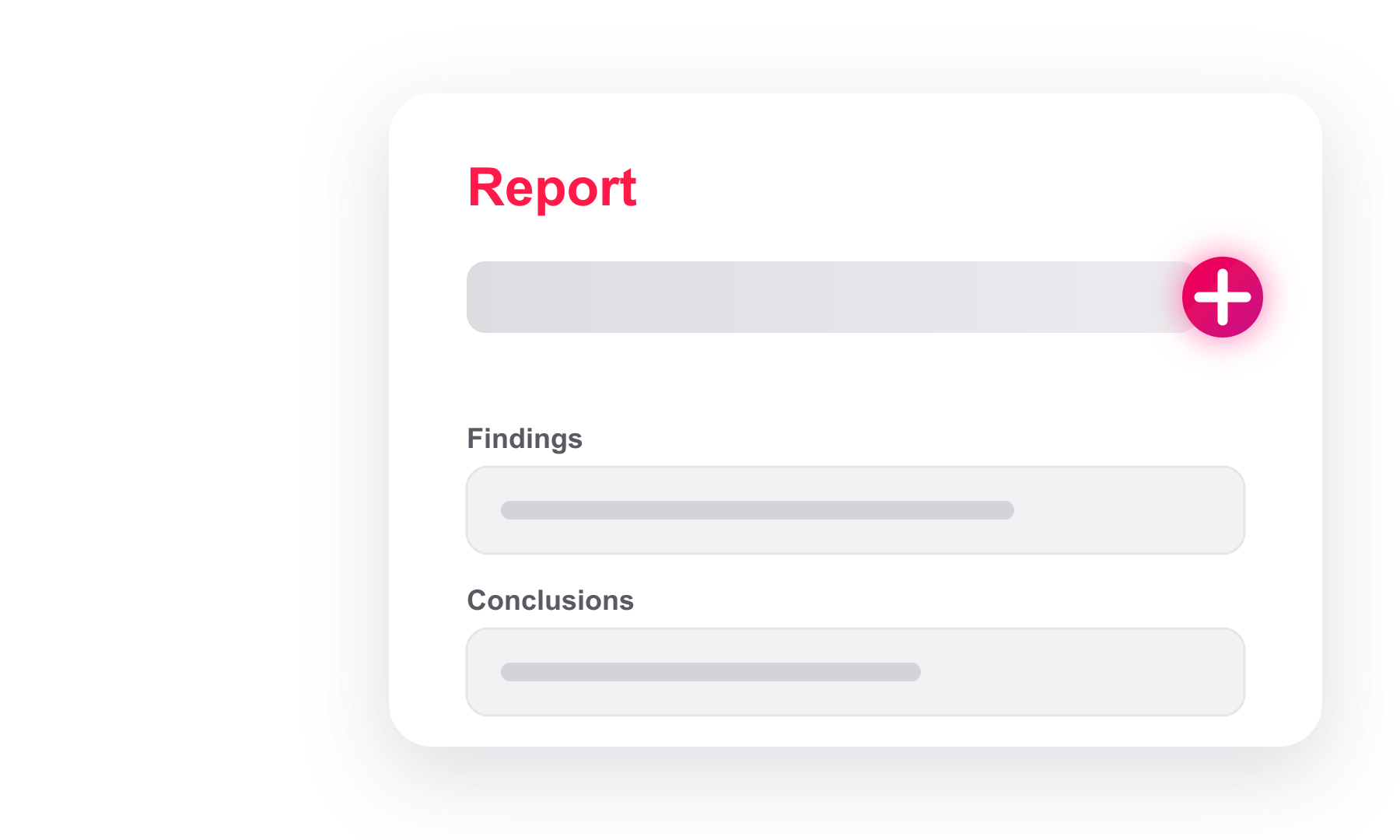
Clinicians can now quickly build structured summaries by adding sentences from the report body directly into Findings or Conclusions with a single click.
Administrators can assign a Findings or Conclusions role to template sections. When configured, a "+" button appears next to text fields, allowing clinicians to add sentences instantly to the appropriate section. This reduces manual copying and helps maintain clear, consistent report summaries.
Preset Support for Report Automation
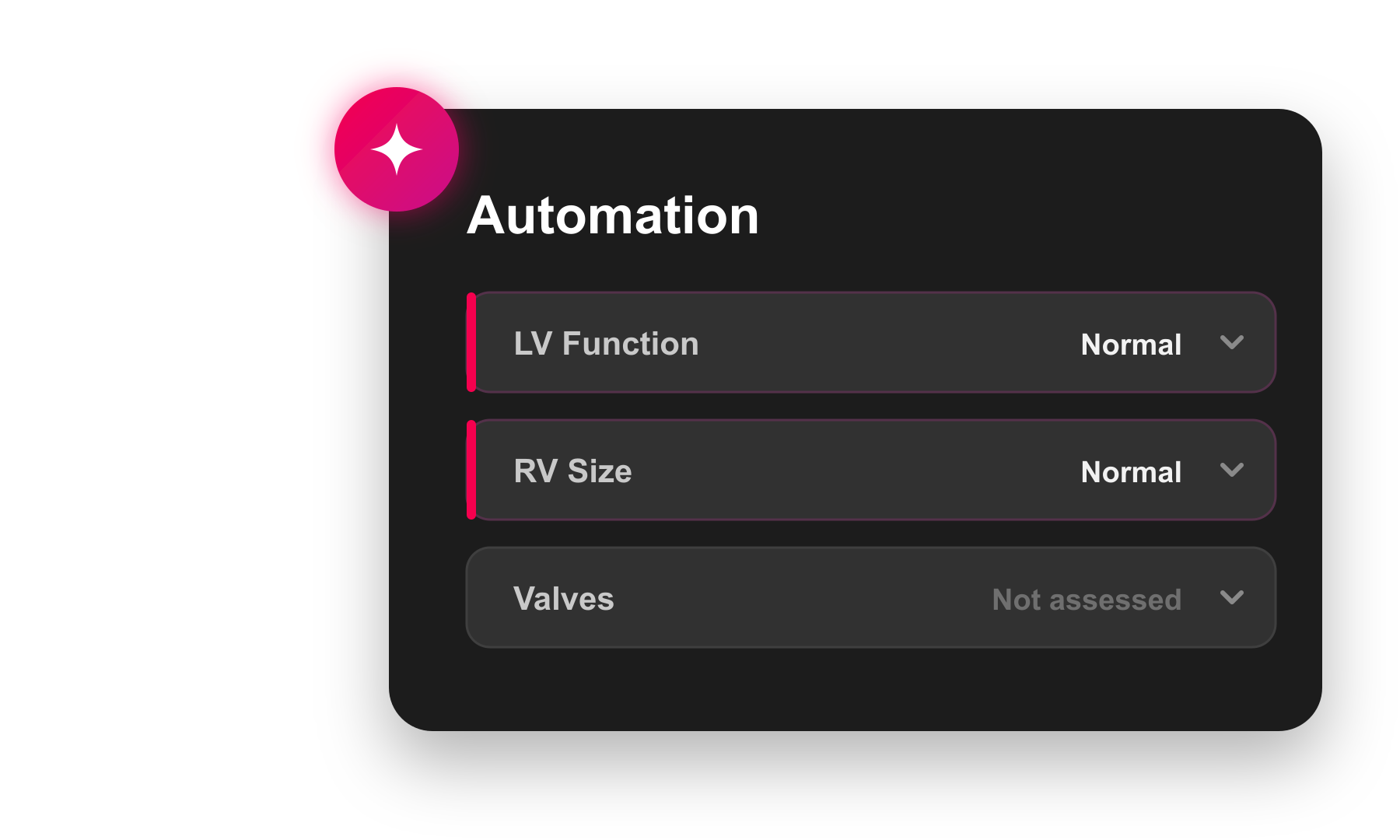
Presets can now be applied to automated dropdowns, allowing clinicians to quickly fill missing or indeterminate values while preserving existing automated selections.
Presets persist through preliminary approval and finalisation, ensuring intentional inputs are not overwritten while speeding up report completion.
Cardiac Stress Test Integration
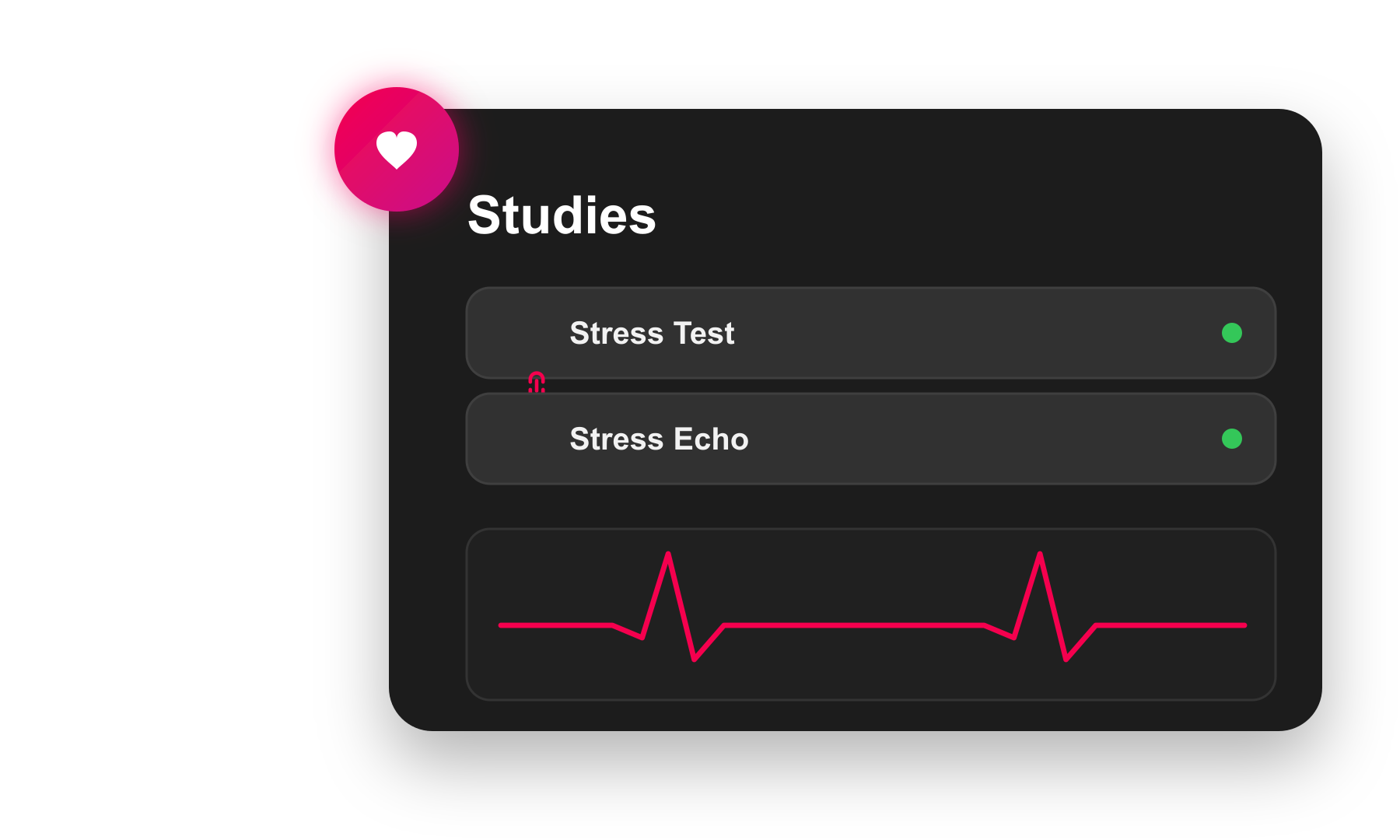
HeartLab now automatically links cardiac stress test studies with corresponding stress echo studies so that all relevant data is available in one place. All well-known stress machine manufacturers and models with export functionality are supported.
When a cardiac stress test and stress echo study for the same patient are sent to HeartLab, they are automatically matched, and the stress test's structured report (SR) content and ECG tracing are copied into the associated stress echo study. Stress test content can be pulled directly into the report just like other measurements, eliminating the need for manual data transfer.
Additional Updates
Reporting and Measurements
- Enhanced Study Function Flexibility. Study functions now support up to ten input parameters, allowing clinicians to build more complex and accurate automations.
- Automatically Toggle Off Existing Measurements. Clinicians can now use 'Save & Replace' to automatically deselect other measurements when saving a new value.
Study Management and Administration
- Multi-Select Study List Actions. Perform actions on multiple studies at once, saving time and reducing workflow inefficiencies.
- Create New Study from Existing Patient. Create a new study directly from an existing study, with patient details automatically pre-filled to reduce data entry.
- Enhanced Study List Filtering. Study List filtering now supports multi-select filters on study type, assignee, and clinical location, and filter selections are saved across sessions.
Study Review and Imaging
- Personalised Mousewheel Options. Choose whether the mouse wheel scrolls frame-by-frame through cine clips, or moves through the study's clip list for a stacked navigation experience.
- Stress Echo Timer Visible on Images. Stress echo timer and machine graphics are now displayed directly on stress mode overlays.
- Improved DICOM Visibility in Clip List. All DICOM objects, including structured reports (SR), are now visible in HeartLab, allowing clinicians to download DICOM SRs, view measurement details, and split studies more accurately.
Need Help?
If you require any assistance with setup or using these new features, please contact HeartLab Support.
July 2026
This release introduces richer reporting capabilities, study merging, enhanced integrations for cardiac stress and ABPM, and greater control over report distribution, alongside a range of other improvements.
December 2025
This release adds automated reporting, study tagging, and study splitting, along with a range of additional updates to study management, attachments, and reporting accuracy.
 MFR
MFR